Rhinoplasty
Nose Surgery
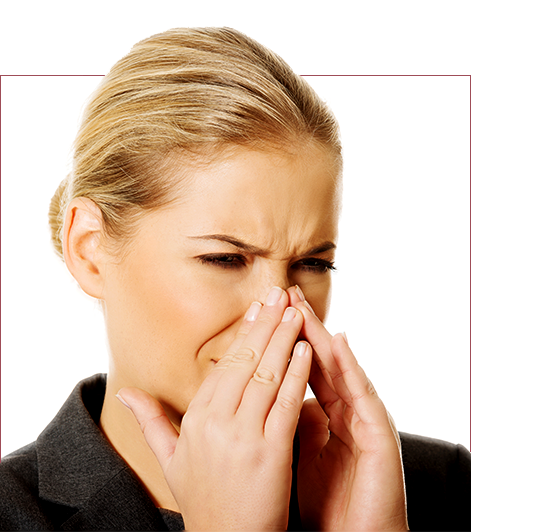
Do you feel your nose isn’t proportionate to the rest of your face, or simply just doesn’t fit?
Have you suffered a nose injury or a birth defect that needs repair? No matter what the reason might be, with a rhinoplasty surgery for nose reshaping from Dr. Kim-Chi Vu, your nose will have new appeal and your face will be in proportion.
Quick Glance
Who Is A Rhinoplasty Surgery Candidate?
If you have an abnormal appearance of the nose as a result of birth defects, injury, or disease, or a nose that is cosmetically unattractive or does not “fit” with your other facial features.
Intended Results:
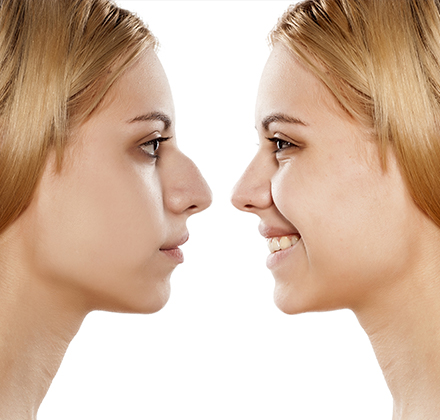
More attractive nasal shape. Your Nose in better proportion to other facial features.
Procedure Description
The procedure is done on an outpatient basis under general anesthesia. Frequently used for difficult or larger noses, rhinoplasty involves one external incision across the columella (strut between the nostrils). Bones, cartilage, and soft tissues are reshaped under direct vision.
Open Rhinoplasty:
If only the nasal tip is abnormal, it may be corrected with either a standard or external open approach.
Open Tip-Plasty:
Large nostrils may be reduced through tiny incisions at the outer base of the nostrils with either type of rhinoplasty.
Rhinoplasty Recuperation And Healing:
The patient goes home with an external cast or splint in place. The nose may be packed for 24-48 hours. The cast or splint is usually removed in one week.
Initial discomfort is easily controlled with oral medication.
The majority of swelling and bruising subsides progressively over 2-4 weeks. External sutures (if any) are removed in 4-6 days. Internal sutures dissolve on their own.
Semifinal result is evident in 3 months. Final result is evident in 12-14 months which is the time necessary for complete tissue softening.
No surgeries are performed without risks.
Dr. Vu’s goal is to perform the planned procedure, take extra precaution during surgery, and most important of all is to be safe and yet achieve utmost optimal outcomes.
Following are some of the potential risks that are commonly discussed about regarding rhinoplasty surgery.
Surgery Risks
A. Possible Need for further surgery - If asymmetry or an undesired contour is present after surgery, you may require an additional small surgical procedure to revise the appearance. This seems to occur more commonly in nasal procedures than in other cosmetic surgery operations because we cannot always predict how the nose will heal over time. If a second procedure seems necessary, we usually wish to wait at least 6 months from the time of the most recent procedure.
B. Difficulty breathing - Swelling: It takes 10-12 months for ALL swelling to disappear and for your final result to show. Nasal surgery causes swelling both inside and outside the nose. If your septum has been operated on, you will have plastic splints within the nostrils. Dr. Vu or a nurse will usually remove the splints in 7-14 days.
C. Decreased sensation - Scarring: Internal scarring or adhesions may occur, but are unlikely complications. Reduced sensation or numbness of nose may occur (usually the nasal tip) following rhinoplasty. The problem usually (but not always) disappears with time.
D. Nasal obstruction - Possible healing problems may occur which may result in the airways remaining blocked or obstructed causing difficulty in breathing.
E. Injury to adjacent structures and nasal functions - Injury to nerves, tear ducts, muscles and sense of smell are very rare, but can potentially occur.
F. Perforated nasal septum - A permanent hole (perforation) developing through the septum (divider between the two sides of the nose) is a remote possibility following rhinoplasty. Most small perforations are essentially asymptomatic. In rare cases, further surgical correction may be indicated. Very rarely, the septal perforation cannot be corrected.
G. Tip swelling - There may be persistent swelling in the nose especially around the tip that may be temporary, last several months or years, or may be permanent. Special attentions are placed during your rhinoplasty postoperative period. Dr. Vu’s goal is to make sure that you are comfortable after you leave the surgery center, and have proper instructions how to take care of yourself in order for you to have a pleasant surgical experience.
Post-Operative Care
A. Nasal packing - We usually are able to avoid nasal packing after surgery. If you have bled slightly more than usual during your operation, or if there is some other reason, we may occasionally use packing. With packing in place, you will have to breathe through your mouth, and you will have somewhat more swelling than usual. We will usually remove such packing in 24-48 hours.
B. Internal splints - If you have had surgery on your septum as part of your rhinoplasty, plastic splints willbe sutured inside your nose. Although these take up some room, your nasal passages should not be totally obstructed. Dr. Vu will usually remove the splints from 7 to 14 days after surgery.
C. External splint - The splint put on your nose at the end of surgery is intended to provide protection, serving as a sort of small external skeleton. We will change it in the office 2-3 times a week. It will be removed in 10-14 days.
D. Head elevation - Keeping your head (and nose) elevated tends to reduce swelling. If possible, sleep on two or three pillows.
E. Dried blood in nostrils - After surgery, some oozing and bleeding usually occurs for a day or two, and crusting dried blood will collect in the nostrils. Use of NA-SAL or Ocean Spray Saline Nasal Spray for a few days will help clean the area; debris can be removed with an infant aspiration bulb.
F. Numbness and swelling - You may experience some degree of numbness of the tip of your nose for up to one year. You may have some swelling for 12-36 months, and the incision site inside the nose may remain swollen or feel firm for many months after surgery.
G. Swelling - Increasing Intermittent increases in swelling will occur for the first few weeks after surgery.
H. Dripping - You may want to carry some tissues with you for a few weeks after surgery, as your nose may “drip.”
I. Activities - Nasal surgery usually hurts very little. Many people feel quite “normal” within a day or two. If your work keeps you sedentary, you may return when you are able. Heavy exercise or straining can cause bleeding or swelling during the first 2-3 weeks. Please be careful!
Preparing for Your Rhinoplasty
After the consultation, you and the surgeon will schedule a date for your rhinoplasty procedure. Once the date is set, you may receive a set of instructions on what to do prior to your surgery. It’s vital that you follow the instructions carefully, as they are designed to ensure that everything goes smoothly before and after your procedure.
Some of the instructions may include:
- Taking a lab test
- Avoiding anti-inflammatory drugs such as ibuprofen and herbal supplements
Taking new medications or adjusting your current medications If you have any questions, please don’t hesitate to reach out to our friendly staff at The Vu Center.
The Rhinoplasty Procedure
On the day of your surgery, you will meet with your surgeon, ask any last-minute questions, and prepare to go into the operating room.
During the actual procedure, your surgeon will either make a small incision on the inside of your nose, or they will make an incision at the base of your nose between your nostrils. Once the incision is made, your surgeon will be able to manipulate the cartilage, bone, or skin that make up your nose to shape it into the final result. Depending on how much the surgeon will change your nose, they can use cartilage from deeper inside your nose or your ear for small changes, or cartilage from your ribs or other parts of your body for larger changes. The surgeon can also correct a deviated septum to improve breathing.
After the Procedure
After the surgeon has made all of the necessary changes, they will replace the skin around your nose and close the incision.
To ensure your nose heals correctly, you may be instructed to rest with your head raised higher than your chest. This will help to reduce any bleeding or swelling in your nose, both of which are normal following the procedure. You will likely have tape and splints on the outside of your nose to help protect and support it as it heals. Your surgeon may also use internal dressings that can be removed in one to seven days following the procedure.
To ensure proper healing, your doctor may instruct you to:
• Avoid strenuous activities
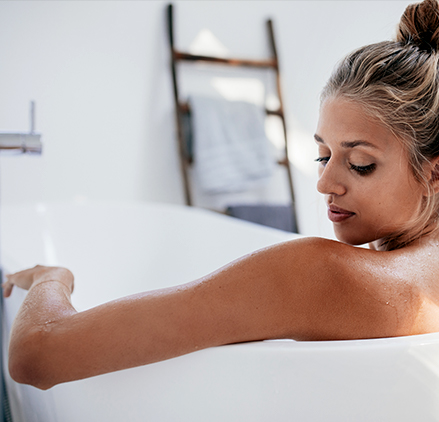
• Take baths instead of showers
• Brush your teeth gently
• Avoid extreme facial expressions
• Not blow your nose
• Wear clothes that fasten in the front to avoid pulling clothes over your head
Learn More at The Vu Center!
If you are interested in learning more about a breast augmentation, or you want to find out if this cosmetic procedure is right for you, our board-certified surgeons at The Vu Center are here to help! We offer a variety of plastic and cosmetic surgery options to help you love the body you’re in. Explore our website to learn more and contact our Portland plastic surgery clinic to schedule a consultation.
We look forward to helping you!